Save money: free your software from dependency chaos
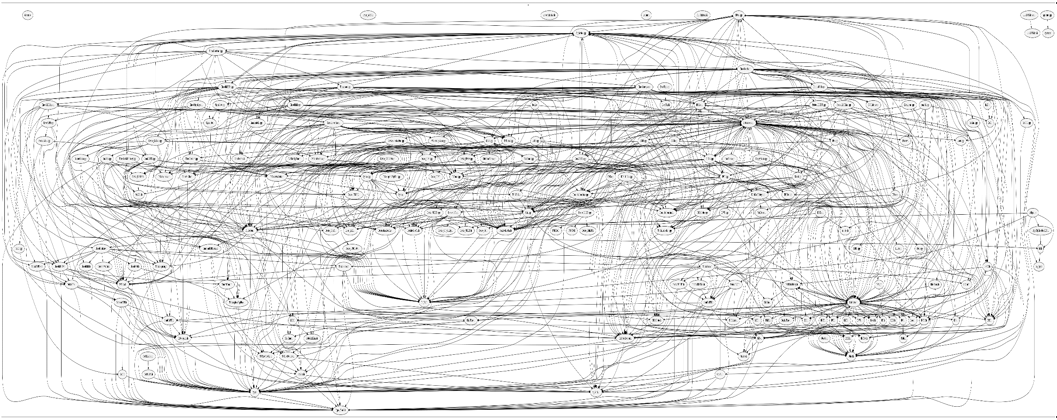
Even given a clean starting architecture, complexity inadvertently increases during the evolution and maintenance of the software
Once the complexity is assessed, flaws can be identified (too big classes or methods,
classes that do not comply with the basic design principles, detrimental and cyclic dependencies, etc.).
Then, the principles of the design patterns can be applied.
The subsequent analysis of the improved dependency structure usually results in repartitioning of the components
and, if feasible, in modification of the overall architecture.
SIRS GmbH refactoring process proceeds in three steps
Other services
Expertise areas
Embedded: Linux, ThreadX, ARM microprocessors, C++, Qt
PC-based: C++, C#, Qt, Python
Model Driven Development with IBM Rhapsody
Agile interdisciplinary and multinational teamwork
Scrum Master
Working in Continuous Delivery environment
The owner of SIRS GmbH has 20-year experience in the industrial software development. He began as leading software engineer in a spin-off company of the Swiss Federal Institute of Technology (ETH Zurich) and has completed his employee curriculum vitae as Senior Software Architect at the R&D Department of Mettler Toledo GmbH. SIRS GmbH is his private initiative to support start-ups and other companies in developing, maintaining and improving the instrumentation software.
Prior to the above engagement, he spent 15 years in the applied scientific research. He was
the principal co-investigator in the DCMF microgravity experiment carried out in 1996 onboard the Space Shuttle "Endeavour"
(collaboration of ETH Zurich with European Space Agency and Contraves AG Zurich).